
A Guide to Financial Marketing
A practical guide to financial marketing, covering search, trust, digital visibility, and how clients choose advisors today.


Financial marketing has changed dramatically over the last decade. Referrals and personal networks still matter, but most prospective clients now begin their search online. They research advisors, compare services, read educational content, and evaluate credibility long before scheduling a consultation.
For financial advisors, this shift means marketing is no longer about promotion alone. It is about visibility, trust, and clarity at every stage of the decision-making process. This guide explains how financial marketing works today, where advisors should focus their efforts, and how digital channels—including search and AI—shape how clients discover and choose advisory firms.
How Prospective Clients Research Financial Advisors
Most people do not choose a financial advisor impulsively. Whether they are planning for retirement, managing wealth, or navigating a major life transition, clients tend to research carefully. They look for answers to questions about experience, philosophy, and fit.
Search plays a central role in this process. Prospects search for terms related to financial planning, retirement strategies, fiduciary advice, and local advisors. According to guidance from the U.S. Securities and Exchange Commission, investors are encouraged to research advisors thoroughly before engaging services, which further reinforces the importance of a strong digital presence.
Financial marketing must support this research behavior by making it easy for prospects to find accurate, helpful, and credible information.
Why Trust Is the Foundation of Financial Marketing
Financial decisions involve risk, long-term impact, and personal goals. As a result, trust is the most important factor in financial marketing. Clients are not just choosing a service—they are choosing a relationship.
Effective financial marketing emphasizes:
- Transparency around services and approach
- Clear explanations rather than sales language
- Professional tone and educational content
- Consistency across all digital touchpoints
Marketing that feels overly promotional or vague can create hesitation rather than confidence. Trust is built through clarity and repetition, not persuasion.
The Role of SEO in Financial Marketing
Search engine optimization (SEO) is one of the most important components of modern financial marketing. SEO helps advisory firms appear when prospective clients are actively searching for guidance.
Unlike paid advertising, SEO captures existing intent. Prospects searching for financial planning or retirement advice are already motivated. SEO ensures your firm is visible during those moments.
Strong SEO supports financial marketing by:
- Increasing visibility for service-based searches
- Reinforcing geographic relevance
- Structuring content so it is easy to understand
- Supporting long consideration cycles
Search engines rely on clear signals to understand who you serve and what you offer. When those signals are missing, even well-qualified advisors can remain invisible online.
Content Marketing and Financial Education
Educational content plays a critical role in financial marketing. Clients want to understand not just what you do, but how you think. Content allows advisors to demonstrate expertise without selling.
Common forms of financial content include:
- Articles explaining planning strategies
- Retirement and wealth education guides
- FAQs addressing common client concerns
- Commentary on market concepts
Educational content also aligns with regulatory guidance from organizations like FINRA, which emphasize investor education and informed decision-making.
Content marketing builds familiarity before the first conversation, making prospects more comfortable reaching out.
Local Visibility and Regional Relevance
For many advisors, geography still matters. Even firms that work with clients remotely benefit from strong local or regional visibility.
Local-focused financial marketing helps by:
- Appearing in location-based searches
- Reinforcing legitimacy and accessibility
- Supporting in-person and virtual consultations
Search engines prioritize relevance, and location is a key signal. Clear service area information and consistent local references help reinforce where your firm operates and who it serves.
Compliance and Marketing Alignment
Financial marketing must operate within regulatory boundaries. This does not limit effectiveness—it simply shapes how messaging is delivered.
Strong financial marketing aligns with compliance by:
- Avoiding performance guarantees
- Using educational, factual language
- Clearly describing services without exaggeration
- Maintaining consistent disclosures
Advisors should ensure marketing efforts align with guidance from bodies such as the SEC’s Investment Adviser Marketing Rule, which governs how advisory services are presented.
Marketing that prioritizes accuracy and professionalism builds trust while reducing regulatory risk.
The Growing Role of AI in Financial Marketing
AI-powered tools like ChatGPT are increasingly part of how people research financial topics. Prospects may ask broad questions about retirement planning, wealth strategies, or how to find an advisor rather than starting with a traditional search.
AI tools generate responses based on information they understand clearly and consistently. This makes clarity and structure critical components of financial marketing.
SEO supports AI visibility by:
- Defining services and specialties clearly
- Reinforcing expertise and authority
- Structuring content logically
- Maintaining consistency across pages
AI does not replace SEO. It relies on the same foundational signals that strong SEO creates.
Financial Marketing Is a Long-Term Strategy
Financial decisions take time. Prospects may research advisors for weeks or months before reaching out. Marketing must support this extended journey.
Effective financial marketing:
- Maintains visibility over time
- Reinforces trust at multiple touchpoints
- Provides answers at different stages of consideration
- Builds familiarity before direct contact
SEO and content-driven strategies are particularly effective because they continue working even when prospects pause or return to their research later.
What Financial Advisors Should Focus On First
Rather than spreading efforts too thin, advisors benefit from focusing on fundamentals:
- Clear service descriptions
- Educational content that reflects expertise
- Search visibility for high-intent queries
- Consistent, professional messaging
Marketing should reduce friction and uncertainty. The goal is not to convince prospects, but to support informed decision-making.
Final Thoughts
Financial marketing has evolved into a trust-driven, digital-first process. Advisors who focus on clarity, visibility, and education are better positioned to connect with prospective clients during the research phase.
SEO, content, and AI visibility are not separate strategies—they work together to support discovery and credibility. Firms that invest in these areas create sustainable marketing systems that align with how clients choose advisors today.
Financial marketing is not about being louder. It is about being present, clear, and trustworthy when it matters most.
Learn about our GEO approach
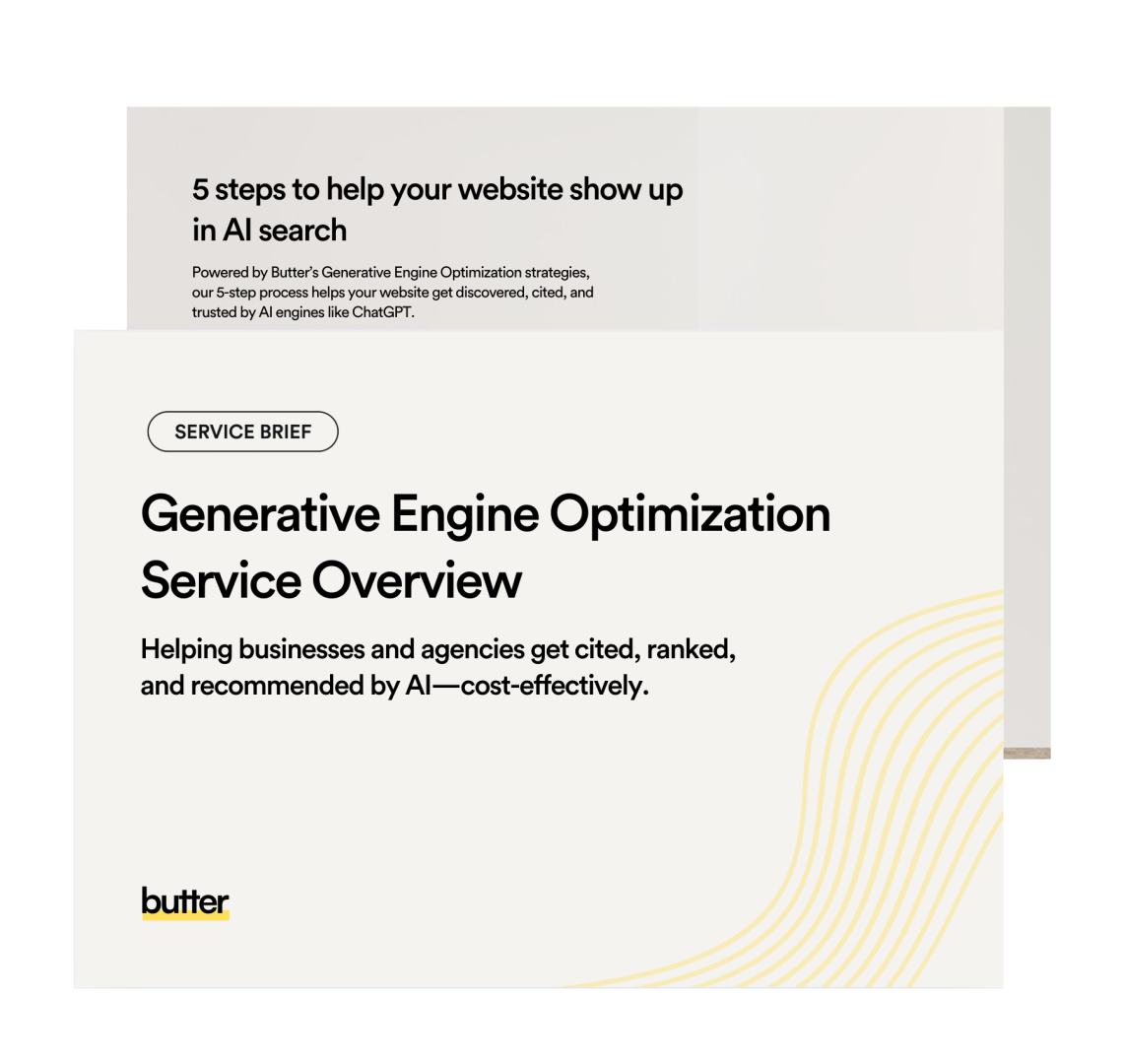
Generative Engine Optimization from Butter
AI engines like ChatGPT are changing how people discover products and services. Instead of showing ten blue links like Google, they generate direct answers, pulling from trusted sources across the web. This guide breaks down how Butter’s GEO service helps your website become one of those trusted sources.
Budget-friendly GEO & SEO services
GEO
Reliable managed GEO to help your business show up in generative engines.
$399/mo
.png)
GEO+SEO
Everything in the GEO plan, plus managed full-service search engine optimization.
$799/mo
.png)
AI visibility & search marketing add-ons
Public Relations
$299
AI Ads
$399
Social Media
$499

Butter saves me stress and frees up 50% of my time to focus on growing my new business.
Khaled A., Owner at Sebala Assisted Living
Join the websites already partnering with Butter for GEO and SEO
Show up in Google, ChatGPT, and AI search with Butter's GEO + SEO services. Starting at $399/month. No contract options. Cancel anytime.