
A Guide to Technology Marketing Beyond Lead Generation
A comprehensive guide to technology marketing, covering funnels, pipelines, channels, SEO, and AI-driven buyer discovery.


Technology marketing has become more complex as buying behavior, channels, and discovery methods continue to evolve. Buyers no longer rely on a single touchpoint or campaign to make decisions. Instead, they move through a long research-driven journey that involves search engines, content, peer validation, and increasingly, AI-powered tools.
For technology companies, marketing is no longer just about awareness or lead generation. It is about building a system that supports the entire funnel, feeds the pipeline, and aligns with how buyers actually evaluate solutions today. This guide breaks down modern technology marketing through the lens of funnels, pipelines, channels, and the growing role of SEO and AI.
How Technology Buyers Discover Solutions Today
Most technology buyers begin their journey long before they speak to sales. They research problems, explore solution categories, compare vendors, and validate options independently. This research phase is where marketing has the greatest influence.
Buyers search for use cases, integrations, alternatives, and implementation considerations. They read blogs, watch videos, review documentation, and ask peers for recommendations. Increasingly, they also use AI tools to summarize options or identify vendors that fit their needs.
Technology marketing must be built to support this self-directed discovery. If your company is not visible during research, it is unlikely to be considered later.
The Technology Marketing Funnel Explained
The technology marketing funnel is no longer linear, but it still provides a useful framework for understanding buyer intent. Each stage of the funnel requires different messaging, channels, and metrics.
At the top of the funnel, buyers are identifying problems and exploring categories. Marketing here focuses on education and awareness. In the middle of the funnel, buyers are evaluating solutions, comparing vendors, and narrowing options. Marketing shifts toward differentiation, proof, and clarity. At the bottom of the funnel, buyers are validating decisions and assessing risk. Marketing supports sales with trust signals, case studies, and enablement.
Effective technology marketing ensures continuity across these stages. Content, messaging, and channels should reinforce one another rather than operate in silos.
From Funnel to Pipeline: Where Marketing Creates Revenue Impact
While the funnel describes buyer behavior, the pipeline reflects business outcomes. Pipeline is where marketing’s effectiveness becomes measurable in revenue terms.
Technology marketing contributes to pipeline by:
- Creating demand through visibility and education
- Capturing intent through search, content, and inbound channels
- Nurturing prospects until they are sales-ready
- Supporting sales conversations with relevant content
Strong marketing systems do not simply generate leads. They generate qualified opportunities that align with product fit and buyer readiness. This alignment is critical for technology companies with long sales cycles and complex buying committees.
Marketing Channels That Matter for Technology Companies
Technology marketing relies on a mix of channels, each playing a different role in the buyer journey. The most effective strategies integrate channels rather than relying on one source of traffic or leads.
Search is foundational because it captures existing intent. Content supports education and authority. Email nurtures relationships over time. Paid channels accelerate reach and fill gaps. Social and communities reinforce credibility and visibility. Events and webinars deepen engagement.
Rather than treating channels independently, high-performing technology teams design them to work together. Search drives discovery, content builds trust, and downstream channels convert interest into pipeline.
Why SEO Is Central to Technology Marketing
SEO is one of the most critical components of technology marketing because it aligns directly with how buyers research solutions. Unlike paid campaigns, SEO captures demand that already exists.
Technology SEO focuses on:
- Problem- and solution-based queries
- Use cases and industries
- Integrations and alternatives
- Educational and technical content
SEO also supports long sales cycles by maintaining visibility over time. Buyers may return to search multiple times before engaging. SEO ensures your company remains present throughout that journey.
AI Search and the New Discovery Layer
AI-powered tools like ChatGPT are changing how buyers gather information. Instead of clicking through multiple websites, users increasingly ask AI tools to summarize options, explain categories, or suggest vendors.
For technology companies, this creates a new discovery layer. Visibility is no longer limited to traditional search results. It also includes whether your company is referenced, summarized, or recommended by AI systems.
AI tools rely on clarity, structure, and consistency. SEO plays a critical role here by helping define what your technology does, who it’s for, and how it’s used. Companies with clear positioning and well-structured content are more likely to appear in AI-driven answers.
SEO and AI Are Not Separate Strategies
A common misconception is that AI optimization replaces SEO. In reality, AI systems depend on the same signals SEO creates. Clear information architecture, consistent messaging, and authoritative content benefit both search engines and AI tools.
Technology marketing teams should view SEO and AI visibility as connected. SEO ensures your content is discoverable and understandable. AI amplifies that clarity by surfacing it in new formats and interfaces.
The brands that win in AI discovery are typically the same ones that have invested in strong SEO foundations.
Aligning Marketing With Sales and Product
Technology marketing cannot operate in isolation. It must align closely with sales and product teams to be effective.
Sales teams provide insight into objections, buying criteria, and deal friction. Product teams provide clarity on features, roadmaps, and differentiation. Marketing translates these inputs into messaging, content, and distribution.
When alignment exists, marketing supports sales with relevant materials and prepares buyers before conversations even begin. This shortens sales cycles and improves close rates.
Measuring What Matters in Technology Marketing
Technology marketing success should be measured beyond surface-level metrics. Traffic and leads matter, but pipeline impact matters more.
Key indicators include:
- Search visibility for high-intent queries
- Engagement with educational content
- Conversion from inquiry to opportunity
- Contribution to pipeline and revenue
Measurement should reflect the full buyer journey. Marketing that supports research, education, and trust may not convert immediately, but it plays a critical role in eventual revenue.
Building a Sustainable Technology Marketing System
Short-term campaigns can create spikes in attention, but sustainable growth comes from systems. Technology marketing systems are built around repeatable processes rather than one-off tactics.
These systems typically include:
- Ongoing SEO and content development
- Consistent messaging across channels
- Regular measurement and optimization
- Alignment across teams
A system-based approach ensures marketing continues working even as products evolve, markets shift, and channels change.
Final Thoughts
Technology marketing today is about more than generating leads. It is about supporting how buyers research, evaluate, and choose solutions. Funnels provide structure, pipelines provide accountability, and channels provide reach. SEO and AI provide discovery.
The most effective technology marketing strategies integrate all of these elements into a cohesive system. Companies that invest in visibility, clarity, and alignment position themselves to capture demand both now and as buyer behavior continues to evolve.
Marketing does not end at awareness. It carries through the entire journey—from first search to signed contract.
Learn about our GEO approach
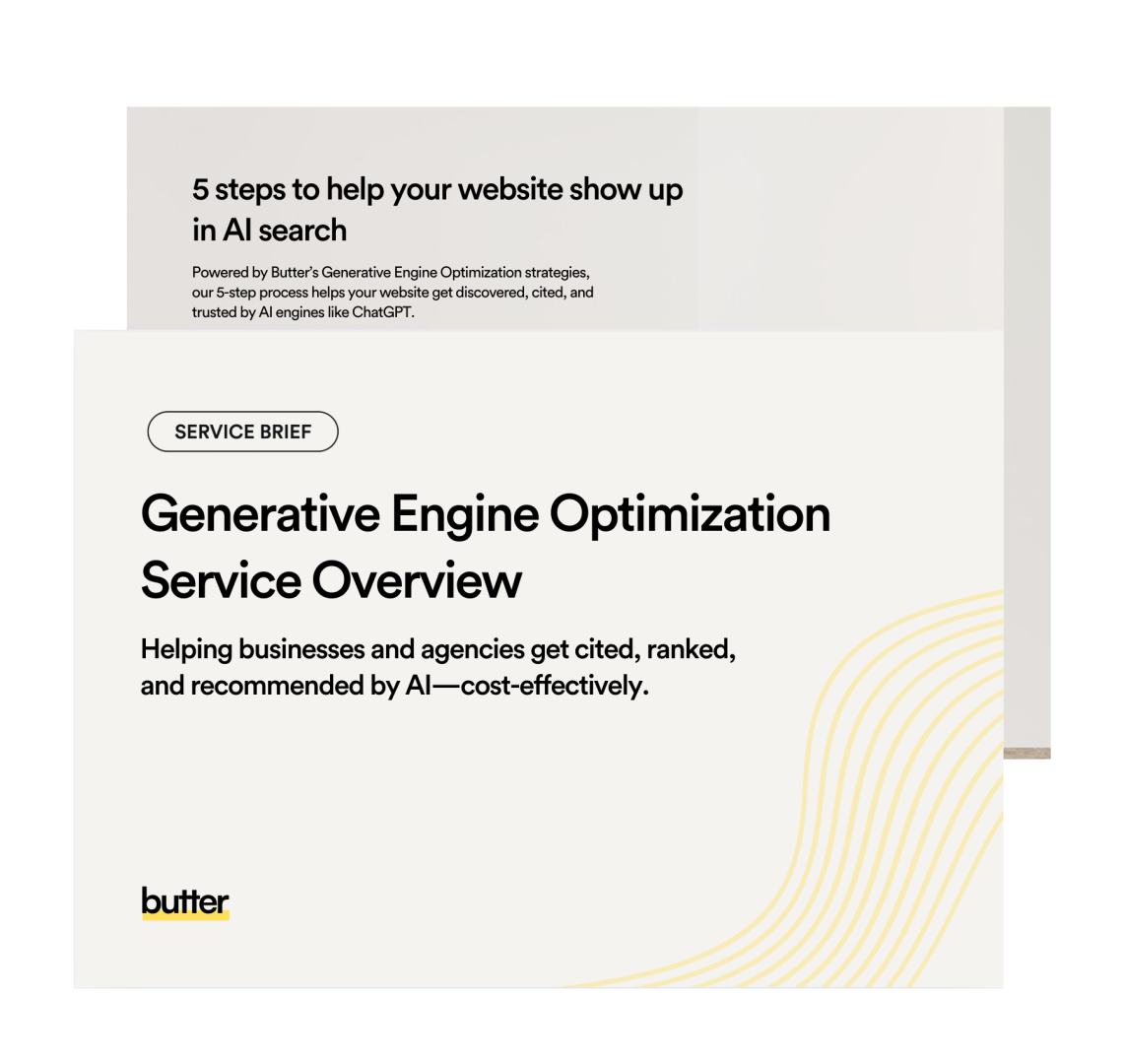
Generative Engine Optimization from Butter
AI engines like ChatGPT are changing how people discover products and services. Instead of showing ten blue links like Google, they generate direct answers, pulling from trusted sources across the web. This guide breaks down how Butter’s GEO service helps your website become one of those trusted sources.
Budget-friendly GEO & SEO services
GEO
Reliable managed GEO to help your business show up in generative engines.
$399/mo
.png)
GEO+SEO
Everything in the GEO plan, plus managed full-service search engine optimization.
$799/mo
.png)
AI visibility & search marketing add-ons
Public Relations
$299
AI Ads
$399
Social Media
$499

Butter saves me stress and frees up 50% of my time to focus on growing my new business.
Khaled A., Owner at Sebala Assisted Living
Join the websites already partnering with Butter for GEO and SEO
Show up in Google, ChatGPT, and AI search with Butter's GEO + SEO services. Starting at $399/month. No contract options. Cancel anytime.