
Franchise Marketing Strategy: How to Scale Visibility Across Locations
A modern franchise marketing strategy for multi-location brands. Learn how to align national and local marketing, win in AI search, and drive consistent leads across every franchise location.


Franchise marketing is fundamentally different from marketing a single business. You are not just promoting one location—you are building a system that must work across markets, operators, budgets, and competitive landscapes. The challenge is scale without chaos: growing visibility everywhere while maintaining brand control and performance consistency.
Today, that challenge has expanded beyond Google alone. AI-driven search engines, answer engines, and recommendation systems now influence how franchise brands are discovered, evaluated, and trusted. A modern franchise marketing strategy must account for both traditional search and AI-powered discovery.
Aligning National Brand Strategy With Local Execution
The most successful franchise brands start with a clear separation of responsibilities. The corporate brand owns strategy, messaging, website structure, and data. Franchisees execute locally within that framework.
From a marketing standpoint, this means the franchisor defines the core value proposition, services, and keyword themes, while local locations reinforce those themes with city-specific relevance. When this alignment breaks down, franchises often suffer from inconsistent messaging, fragmented websites, and uneven performance across markets.
A centralized marketing foundation makes it easier to roll out campaigns, track performance, and adapt to algorithm changes—especially as AI systems increasingly reward clarity and consistency.
Building Location Pages That Actually Convert
Location pages are the backbone of franchise visibility. These pages should not exist just to rank; they should be built to convert local traffic into calls, bookings, and store visits.
High-performing franchise location pages typically include clear service descriptions tailored to the market, embedded maps, local testimonials, operating hours, and structured data that helps search engines and AI models understand the business. When done correctly, these pages become trusted local references rather than thin placeholders.
AI search systems in particular evaluate whether a page demonstrates real-world relevance. Pages that reflect local context, customer feedback, and operational details are more likely to be surfaced in AI-generated answers.
Local SEO as a Competitive Advantage for Franchisees
Local SEO is often the most immediate growth lever for franchise locations. Optimizing Google Business Profiles, earning consistent reviews, and maintaining accurate listings across directories directly impact visibility in map results and local searches.
For franchises, local SEO also protects brand equity. Inconsistent listings or neglected profiles can cause AI systems to surface outdated or incorrect information, which undermines trust at scale. Centralized oversight combined with local participation creates the best outcome.
Content Strategy for Franchise Growth
Franchise content should serve two audiences: prospective customers and AI systems that interpret and summarize brand authority. Educational content, service explainers, and location-specific FAQs help capture long-tail search demand while reinforcing topical relevance.
Rather than publishing disconnected blog posts, franchise brands should focus on content clusters tied to core services and locations. This structure makes it easier for AI models to associate the brand with specific use cases and industries.
AI Search and Franchise Visibility
AI search has changed how franchise brands are discovered. Instead of only ranking links, AI engines summarize options, recommend providers, and compare brands directly within answers.
This means franchise brands must think beyond keywords. AI systems evaluate entity recognition, brand consistency, citations, reviews, structured data, and off-site mentions when deciding which franchises to reference.
If AI cannot clearly understand what your franchise offers, where it operates, and why it is credible, it is unlikely to recommend your brand—even if your traditional rankings are strong.
Optimizing Franchise Sites for AI Understanding
To perform well in AI search, franchise websites need clean structure, clear service definitions, and strong internal linking between national and local pages. Schema markup, FAQs, and consistent naming conventions help AI models connect locations to the parent brand.
Franchises that invest in AI visibility audits often uncover gaps where AI misinterprets services, overlooks locations, or prioritizes competitors with clearer digital signals. Fixing these gaps early creates a long-term advantage as AI adoption accelerates.
Measuring What Matters Across Locations
One of the biggest mistakes in franchise marketing is measuring only top-line traffic. Effective franchise strategies track visibility, engagement, and conversions at both the brand and location level.
This includes monitoring local rankings, review velocity, call tracking, form submissions, and AI visibility signals. When these metrics are tied together, franchisors gain insight into which markets are growing, which need support, and where strategy adjustments are required.
Scaling Franchise Marketing Without Losing Control
The goal of franchise marketing is not just growth—it is controlled growth. A scalable strategy gives franchisees tools and guidance without allowing fragmentation that weakens the brand.
By combining centralized SEO, strong local execution, and AI-ready optimization, franchise brands can build visibility that compounds over time. As AI search continues to shape discovery, franchises that adapt early will own more digital real estate across every market they serve.
Learn about our GEO approach
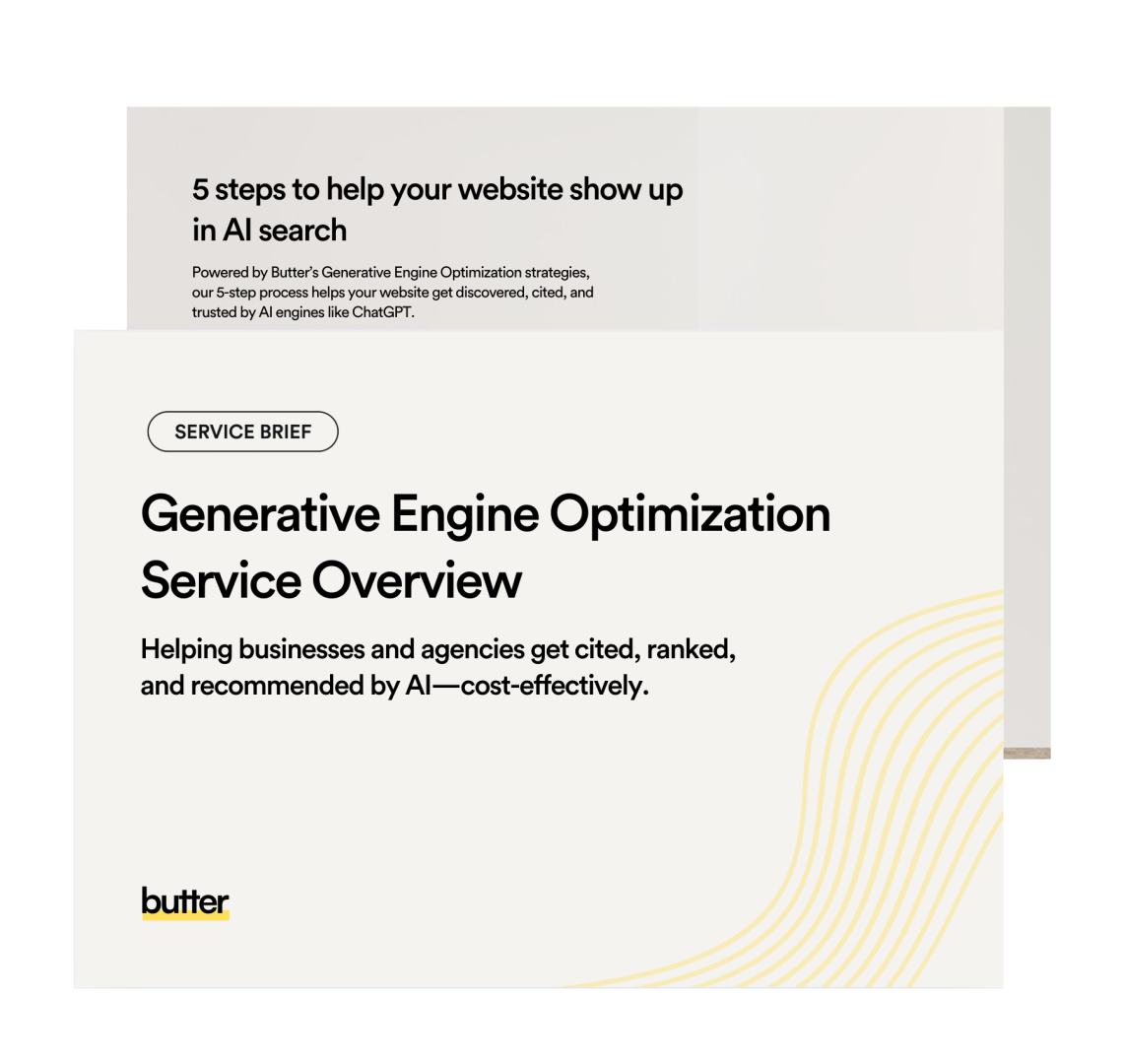
Generative Engine Optimization from Butter
AI engines like ChatGPT are changing how people discover products and services. Instead of showing ten blue links like Google, they generate direct answers, pulling from trusted sources across the web. This guide breaks down how Butter’s GEO service helps your website become one of those trusted sources.
Budget-friendly GEO & SEO services
GEO
Reliable managed GEO to help your business show up in generative engines.
$399/mo
.png)
GEO+SEO
Everything in the GEO plan, plus managed full-service search engine optimization.
$799/mo
.png)
AI visibility & search marketing add-ons
Public Relations
$299
AI Ads
$399
Social Media
$499

Butter saves me stress and frees up 50% of my time to focus on growing my new business.
Khaled A., Owner at Sebala Assisted Living
Join the websites already partnering with Butter for GEO and SEO
Show up in Google, ChatGPT, and AI search with Butter's GEO + SEO services. Starting at $399/month. No contract options. Cancel anytime.