
Medical SEO: How Doctors Are Found in Search and AI Today
Medical SEO helps doctors get found in search and AI tools like ChatGPT. Learn how SEO drives patient discovery today.


The way patients find doctors has evolved. While Google search is still a primary starting point, AI-powered tools like ChatGPT and AI-assisted search results are now influencing how patients research providers, specialties, and treatment options. For medical practices, this shift does not mean SEO is becoming less important. It means SEO now plays a dual role: supporting traditional search visibility and enabling AI-driven discovery.
Understanding how medical SEO and AI search work together is essential for practices that want to remain visible as patient behavior continues to change.
How Patients Search for Doctors Today
Most patients begin their healthcare journey online. They search for symptoms, conditions, providers, and specialties long before scheduling an appointment. Queries like “primary care doctor near me,” “cardiologist accepting new patients,” or “best dermatologist nearby” are still extremely common.
At the same time, patients are increasingly using AI tools to ask broader questions such as where to find a doctor for a specific condition or how to choose between providers. Instead of reviewing multiple websites, they receive summarized answers that influence their next step.
This means medical practices must be discoverable in both traditional search results and AI-generated responses. Both rely on the same foundation: clear, structured, and accurate information.
Why SEO Is Still the Foundation of Medical Visibility
SEO remains the backbone of online visibility for doctors and medical practices. Search engines still rely on your website to understand what services you provide, what conditions you treat, and where you are located.
Strong medical SEO helps by:
- Improving visibility in local search results
- Making specialty and service pages discoverable
- Reinforcing trust and credibility
- Driving patient calls and appointment requests
Without SEO, your website may exist but not be properly understood or surfaced. This affects not only rankings in Google, but also how AI systems interpret your practice.
AI search does not replace SEO. It depends on it.
How AI Search Uses Medical SEO Signals
AI tools like ChatGPT do not browse the internet like humans. They generate answers based on patterns, clarity, and consistency across information they understand to be reliable.
Medical SEO helps AI systems by clearly defining:
- Your medical specialty
- The services and conditions you treat
- Your location and service area
- How patients can contact or book with you
When this information is structured clearly, AI tools are more likely to reference your practice when users ask questions about finding medical care. Practices with vague, outdated, or poorly organized content are far less likely to appear in AI-generated answers.
Medical SEO and AI Search Are Not Competing Strategies
One of the most common misconceptions in healthcare marketing is that AI search will replace traditional SEO. In reality, AI search builds on the same signals SEO creates.
SEO ensures your website is crawlable, understandable, and authoritative. AI search uses that clarity to summarize and recommend providers when relevant. Practices that invest in SEO are better positioned for AI visibility because their information is easier to interpret.
Rather than choosing between SEO or AI optimization, medical practices should view them as connected. Strong SEO strengthens AI readiness.
What Medical Practices Should Focus On Now
Instead of chasing trends, medical practices should prioritize clarity and patient-centered content. This includes:
- Dedicated pages for each specialty or service
- Clear explanations of conditions treated
- Location-specific information for local relevance
- Simple, patient-friendly language
These elements help patients make informed decisions and help AI systems accurately represent your practice. The goal is not to game search engines or AI tools, but to make your practice easy to understand.
Why Medical SEO Supports Long-Term Practice Growth
Healthcare decisions are built on trust. Patients want confidence before choosing a provider. Consistent visibility across search results and AI-generated answers reinforces credibility before a patient ever contacts your office.
Over time, medical SEO helps practices:
- Reduce dependence on paid advertising
- Attract more qualified patients
- Build authority within their specialty
- Stay visible as search behavior evolves
SEO creates long-term value, while AI search expands where that value shows up.
The Bottom Line on Medical SEO and AI Search
Medical SEO is not becoming obsolete. It is becoming more important as patient discovery expands into AI-powered experiences. AI tools rely on the same fundamentals that good SEO provides: clarity, structure, and relevance.
Doctors who invest in medical SEO today are not only improving their Google visibility but also preparing their practice to be discovered through AI search. Patients are using both traditional search engines and AI tools to find care. Medical practices should be visible in both.
Learn about our GEO approach
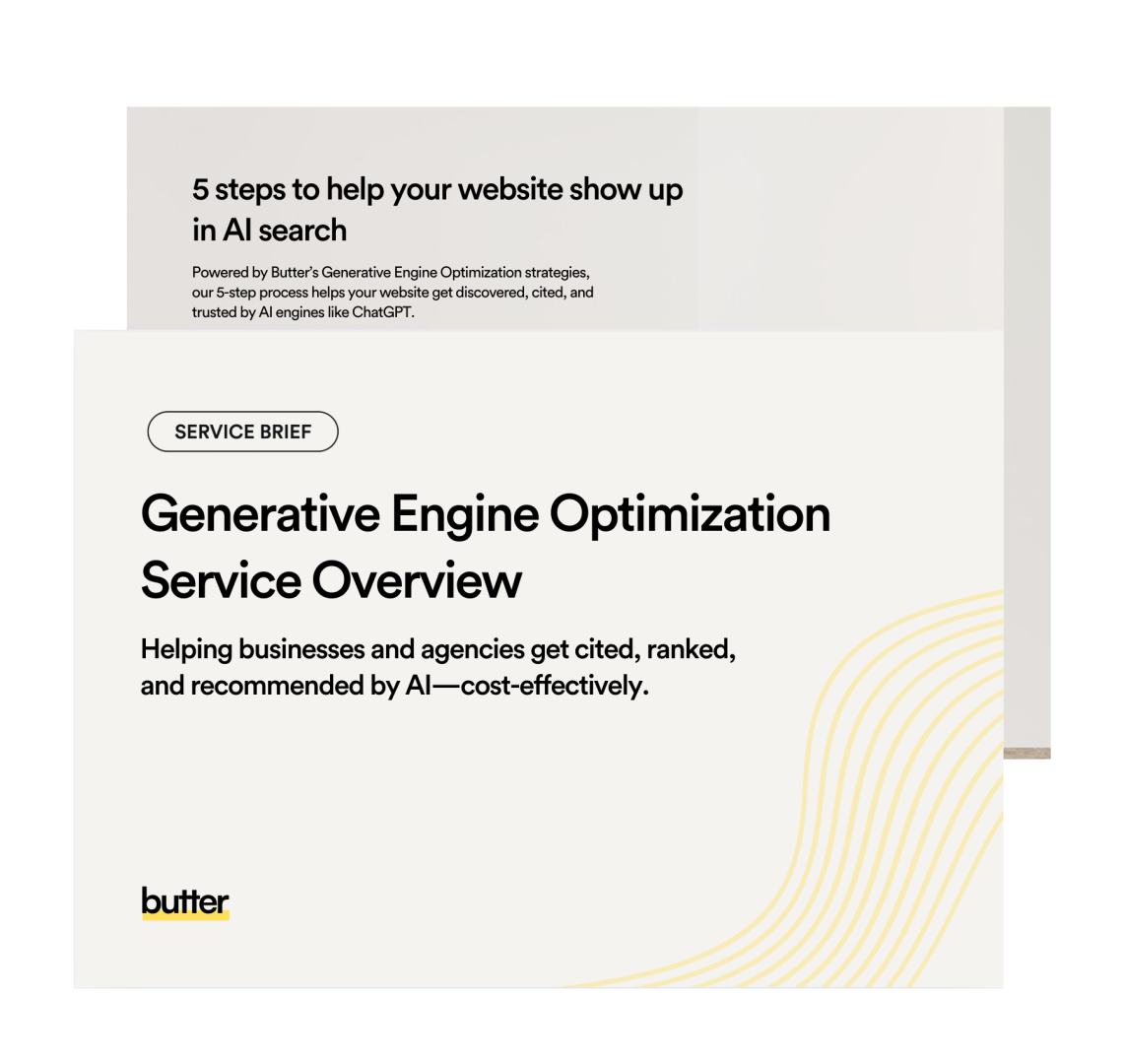
Generative Engine Optimization from Butter
AI engines like ChatGPT are changing how people discover products and services. Instead of showing ten blue links like Google, they generate direct answers, pulling from trusted sources across the web. This guide breaks down how Butter’s GEO service helps your website become one of those trusted sources.
Budget-friendly GEO & SEO services
GEO
Reliable managed GEO to help your business show up in generative engines.
$399/mo
.png)
GEO+SEO
Everything in the GEO plan, plus managed full-service search engine optimization.
$799/mo
.png)
AI visibility & search marketing add-ons
Public Relations
$299
AI Ads
$399
Social Media
$499

Butter saves me stress and frees up 50% of my time to focus on growing my new business.
Khaled A., Owner at Sebala Assisted Living
Join the websites already partnering with Butter for GEO and SEO
Show up in Google, ChatGPT, and AI search with Butter's GEO + SEO services. Starting at $399/month. No contract options. Cancel anytime.