
What Is ChatGPT Atlas? Why It Matters for Your Website
ChatGPT Atlas is reshaping how people browse the web. Learn what Atlas is, how it works, and what it means for websites.


In late 2025, OpenAI launched ChatGPT Atlas, a new AI-powered web browser that embeds ChatGPT directly into the browsing experience. Unlike traditional browsers where users toggle between tabs or tools, Atlas brings intelligent assistance into every page you visit - summarizing content, answering questions, and even taking action on your behalf.
But beyond being “just another browser,” Atlas signals a shift in how websites will be accessed, interpreted, and interacted with -- with broad implications for businesses, marketers, search and answer engine specialists, and web developers. In this article, we explore what Atlas is, how it works, and what it means for the future of websites.
What Is ChatGPT Atlas?
At its core, ChatGPT Atlas is a Chromium-based web browser developed by OpenAI with ChatGPT built into its interface. Instead of separating browsing and AI assistance, Atlas merges them:
- Inline ChatGPT sidebar: Ask questions, get summaries, compare information, or extract insights directly on any page.
- Contextual memory: Atlas can remember context from visited pages (subject to privacy controls) to provide smarter and more personalized assistance over time.
- Agent Mode: In preview for paid users, ChatGPT can act for you — clicking links, filling out forms, making bookings, or completing tasks across sites.
- Privacy controls: Users decide what data ChatGPT sees or retains, including private browsing and memory toggles.
The result: searching, researching, and interacting with websites becomes more conversational and task-oriented.
How Atlas Changes the Web Experience
Atlas isn’t just another browser. It’s a new interaction paradigm:
1. Live AI Assistance on Every Website
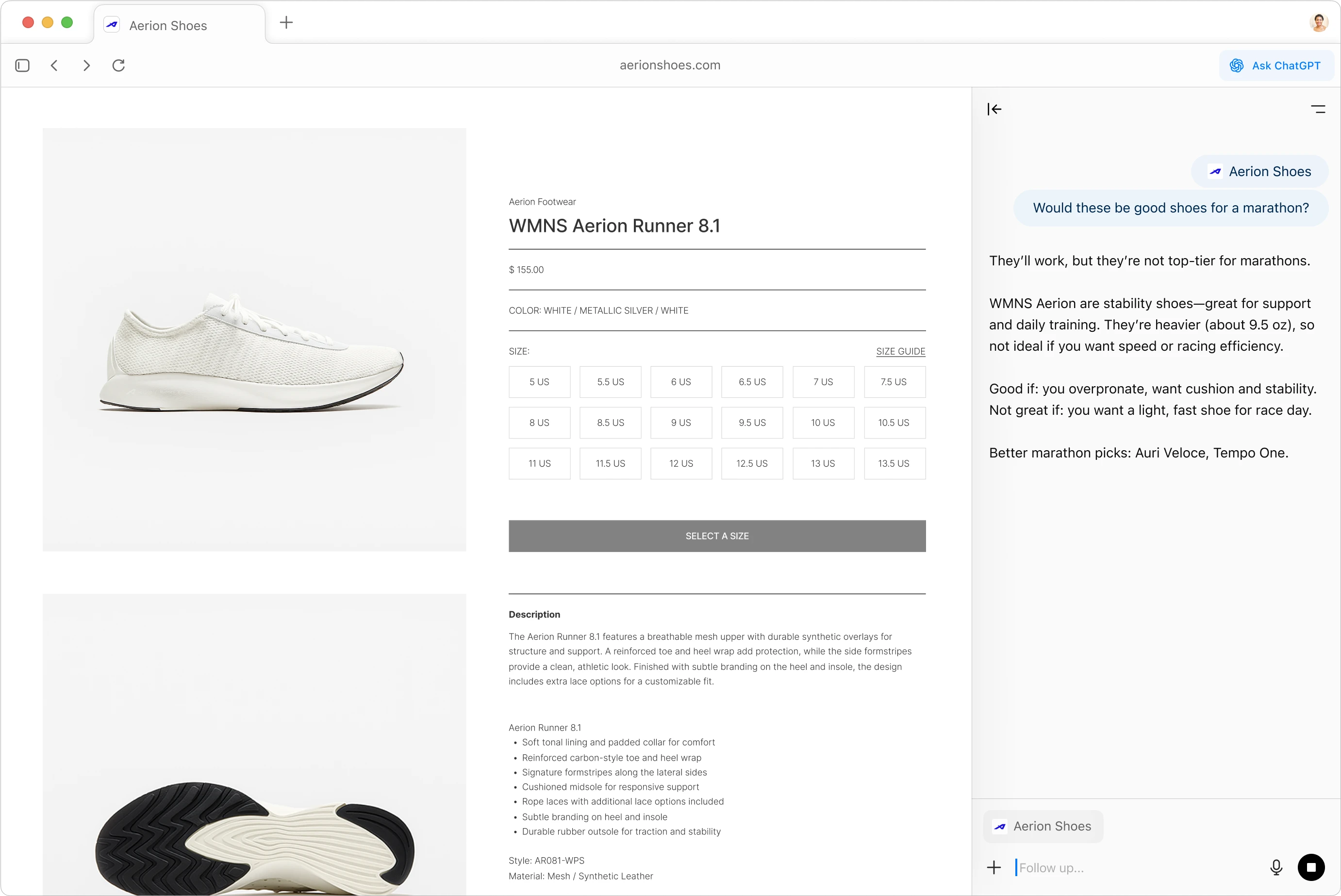
Unlike standard browsing or standalone ChatGPT windows, users in Atlas can:
- Get real-time summaries of page content
- Ask questions about the current page
- Receive insights without copying or switching tools
This drastically changes how people consume content, especially long articles, product pages, FAQs, documentation, or complex tutorials.
2. Action-Driven Browsing With Agent Mode
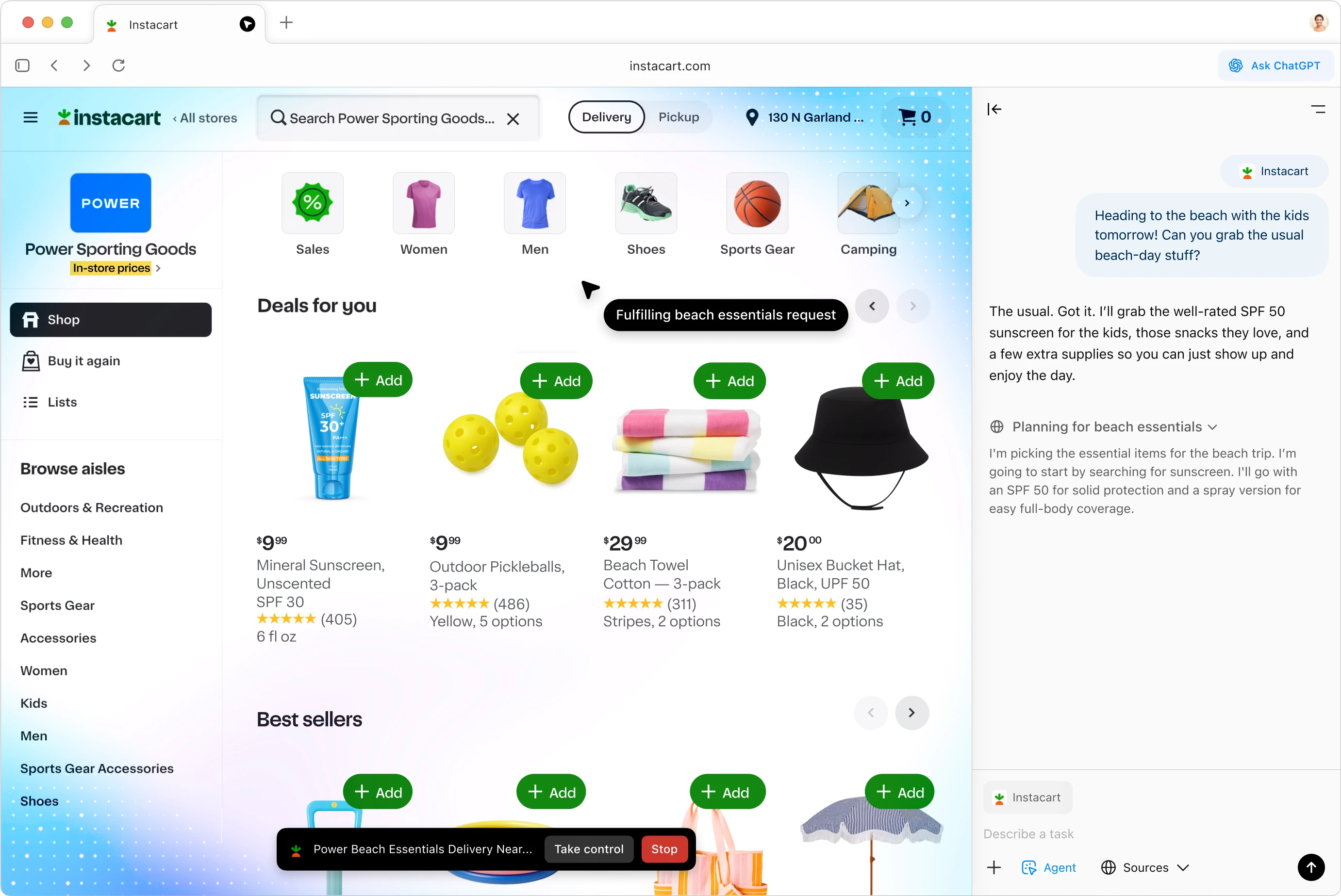
One of the most meaningful shifts introduced by ChatGPT Atlas is Agent Mode, which moves AI beyond answering questions and into actually taking action on the web. Instead of users manually clicking through pages, filling out forms, or repeating the same steps across multiple sites, Agent Mode allows ChatGPT to complete tasks directly within the browsing session. This could include searching for products, comparing options, booking appointments, submitting forms, or navigating multi-step workflows on behalf of the user.
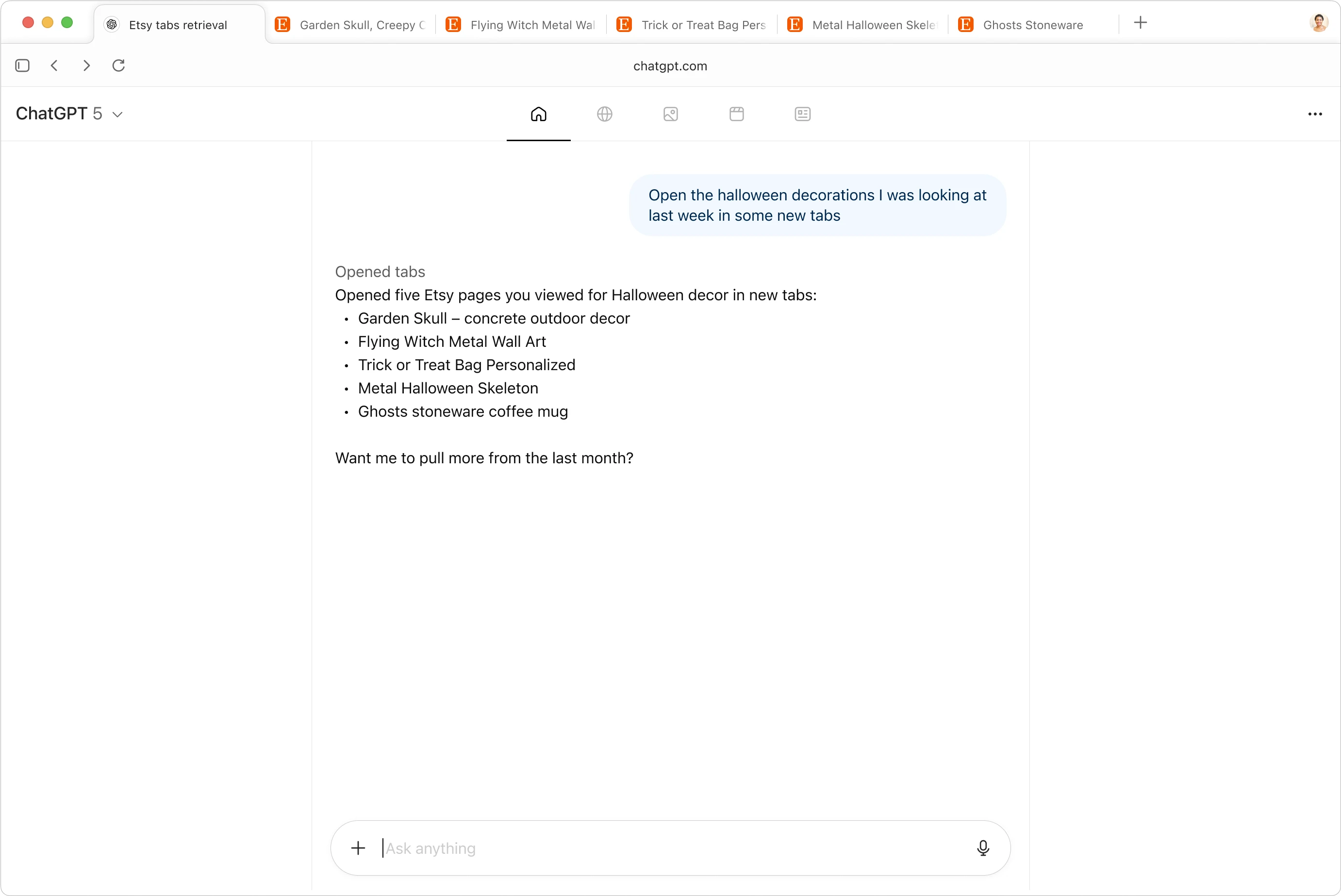
With Agent Mode, Atlas could:
- Automate repetitive tasks like booking or checkout
- Complete forms or searches automatically
- Perform multi-step tasks without manual input
For users, that’s a productivity boost. For websites, it means interactions may happen through AI agents, not just humans.
For websites, this represents a fundamental change in how interactions happen. User actions may increasingly be mediated by AI rather than direct human input. That means pages are no longer just being read. They are being interpreted, summarized, and acted on by an AI agent that needs to understand intent, page structure, and available actions clearly. Websites with clean HTML, predictable layouts, accessible forms, and well-labeled buttons will be far easier for Agent Mode to navigate than sites built with heavy scripts, unclear CTAs, or fragmented user flows.
Agent Mode also shifts how conversions may occur. A user may never scroll a page, watch a video, or read long-form copy. Instead, ChatGPT may extract the necessary information, confirm details with the user in conversation, and execute the conversion itself. This puts greater pressure on accurate content, transparent pricing, clear policies, and structured data, since the AI’s understanding of a site directly affects how and whether it completes an action.
3. Contextual Understanding and Memory
Atlas remembers key points about sites users visit (if permitted), enabling responses to draw from previous browsing context. That changes browsing from isolated moments to ongoing conversations with the web.
What ChatGPT Atlas Means for Websites
1. The Rise of AI-Mediated User Interactions
Users may increasingly interact with your site through ChatGPT prompts — asking AI to summarize, extract prices, compare features, or even fill carts — instead of manually reading pages. This means:
- Content must be AI-friendly: Clear structure, concise headings, and semantic HTML help AI understand and summarize.
- Metadata becomes more important: Titles, descriptions, and schema markup help AI contextualize your content accurately.
2. SEO Must Adapt to AI Browsing
Traditional SEO — optimizing for Google search rankings — still matters. But Atlas may extract information directly from your content without users clicking through, impacting:
- Traffic patterns: Users may get answers without visiting your site, reducing click-throughs.
- Content visibility: AI could favor content that’s clearer, richer, and better structured.
To stay relevant:
- Create AI-ready content: Use structured data, FAQs, and clear summaries.
- Answer key questions directly: Focus on intent — what is the user asking — not just keywords.
3. More Conversational Demand on Website Copy
Atlas users are likely to engage in conversational, question-based interaction. This places a premium on:
- Natural language content that answers common user questions
- Structured data (schema) for GPT to interpret key details
- Frequently updated content so AI answers remain accurate
This trend aligns with growing demand for helpful, user-centered content over keyword-stuffed text.
4. Automation and Data Access Ethics
Agent Mode lets AI act on your site — filling forms or completing actions. If adopted widely, this could impact:
- Site performance: Automated agents acting at scale might stress backend systems.
- Security and privacy: Ensuring safe interactions becomes critical.
- Bot detection: Traditional bot filters may need to evolve to distinguish AI agents from malicious traffic.
ChatGPT Atlas: Challenges and Risks
While Atlas promises richer interaction, it also presents concerns:
- Security risks: AI agents browsing and acting on websites could introduce vulnerabilities or prompt injection attacks.
- Privacy implications: How AI agents store or share browsing context may raise compliance challenges.
- Content integrity: AI summaries may misrepresent nuanced content if it’s poorly structured.
Website owners should plan for responsible AI consumption and safeguards around data sharing.
How Website Owners Can Prepare
Here are practical steps to adapt:
Optimize for AI Understanding
- Use schema markup (FAQ, product, article).
- Structure pages with clear headings and concise paragraphs.
Answer User Questions Directly
- Create detailed, helpful content that anticipates common queries.
- Include explicit definitions and explanations.
Monitor User Behavior
- Track how AI-mediated interactions affect traffic, session duration, and conversions.
Ensure Accessibility and Performance
- AI agents need clean markup and fast loading to interpret pages effectively.
ChatGPT Atlas: A New Era for Websites
ChatGPT Atlas represents a turning point in the evolution of the web — a move from navigation and search to conversation and action. For websites, this means greater emphasis on clarity, structure, user intent, and AI-readiness. While challenges around security and privacy remain, the opportunity lies in adapting early to this shift and positioning your site to thrive in an AI-integrated browsing world.
Learn about our GEO approach
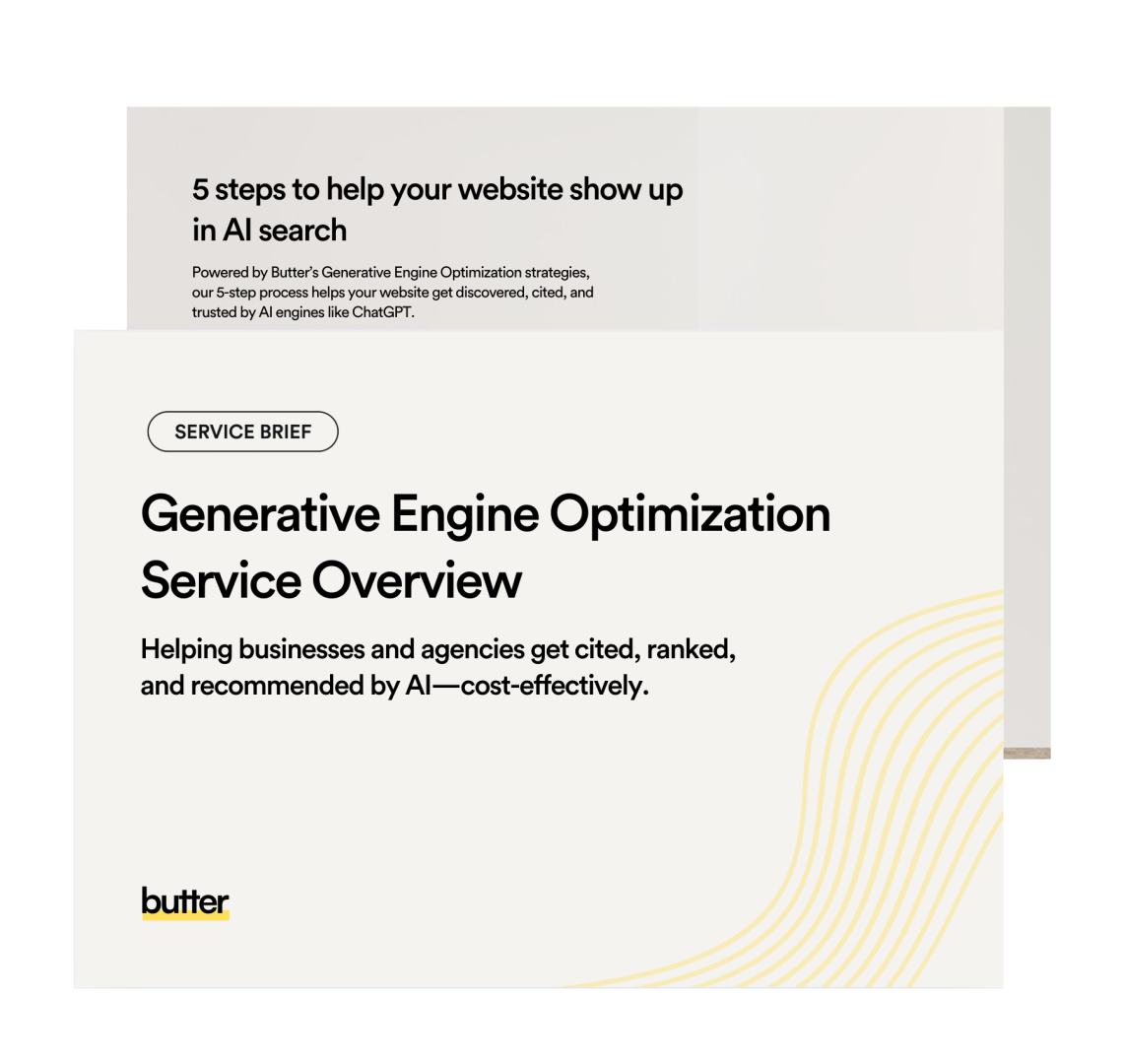
Generative Engine Optimization from Butter
AI engines like ChatGPT are changing how people discover products and services. Instead of showing ten blue links like Google, they generate direct answers, pulling from trusted sources across the web. This guide breaks down how Butter’s GEO service helps your website become one of those trusted sources.
Budget-friendly GEO & SEO services
GEO
Reliable managed GEO to help your business show up in generative engines.
$399/mo
.png)
GEO+SEO
Everything in the GEO plan, plus managed full-service search engine optimization.
$799/mo
.png)
AI visibility & search marketing add-ons
Public Relations
$299
AI Ads
$399
Social Media
$499

Butter saves me stress and frees up 50% of my time to focus on growing my new business.
Khaled A., Owner at Sebala Assisted Living
Join the websites already partnering with Butter for GEO and SEO
Show up in Google, ChatGPT, and AI search with Butter's GEO + SEO services. Starting at $399/month. No contract options. Cancel anytime.